


Can Georgia Police Search Your Phone After An Arrest?
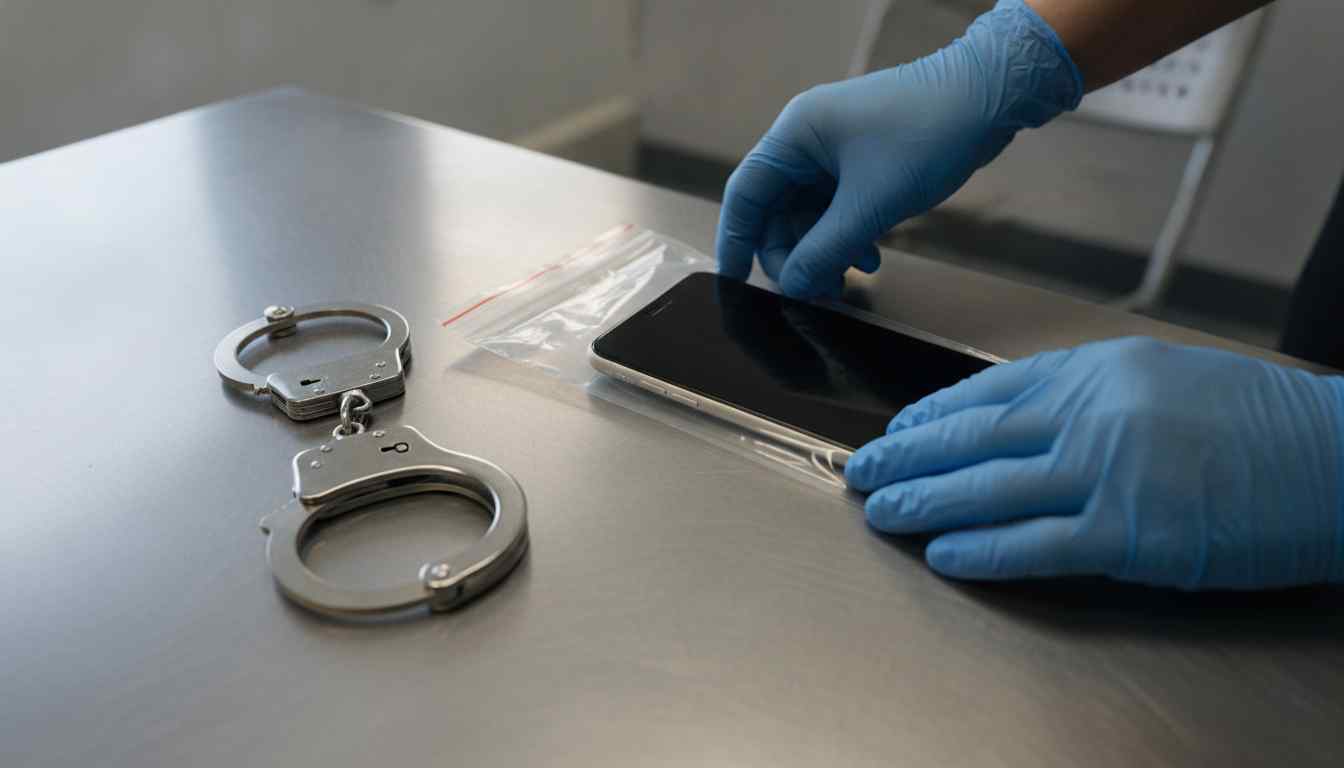
Your phone may contain years of private information. Text messages, photographs, email, financial records, location history, social media accounts, internet searches, contacts, videos, and app data can reveal far more about your life than almost anything you carry in your pocket. If Georgia police arrest you and take possession of your phone, you may wonder whether the arrest gives them permission to start reading through it. In most situations, the answer is no. Police generally need a search warrant or a recognized exception to the warrant requirement before searching the digital contents of a phone. If phone evidence is being used against you in a Georgia criminal prosecution, I look carefully at how officers obtained the device, what authority they relied upon, and whether the search remained within lawful limits.
An Arrest Does Not Automatically Authorize A Search Of Your Phone’s Digital Contents
Police generally may seize physical items from an arrested person as part of the arrest process. A smartphone presents a different constitutional issue when officers want to access the digital information stored inside it.
The United States Supreme Court addressed this issue in Riley v. California. The Court held that the ordinary search-incident-to-arrest exception does not generally authorize police to search digital information stored on a cellphone merely because the phone was seized from an arrested person.
The Supreme Court of Georgia has expressly recognized that rule. In Marchman v. State, the Georgia Supreme Court described Riley as holding that the search-incident-to-arrest exception does not apply to a search of digital information contained in a cellphone seized incident to arrest. That is a major distinction between taking possession of your phone and searching what is inside it.
Police Can Secure The Phone While Seeking A Warrant
The warrant requirement does not necessarily mean officers must leave your phone in your possession after an arrest.
Depending on the circumstances, police may lawfully seize and secure the physical device while they seek judicial authorization to examine its contents. What they generally cannot do is treat the arrest itself as blanket permission to browse your messages, photographs, applications, or other stored digital information.
That distinction matters. Seizure of the device and search of its contents are separate Fourth Amendment events. If police obtain a warrant, I then examine whether the warrant itself was valid and whether the search remained within its authorized scope.
Georgia Search Warrants Require Probable Cause
Georgia’s warrant procedure is addressed in O.C.G.A. § 17-5-21. The statute requires a sworn application stating facts sufficient to show probable cause that a crime is being committed or has been committed. The warrant must particularly describe the place or person to be searched and the things to be seized.
When police seek access to cellphone evidence, probable cause must connect the requested search to evidence relevant to the investigation. Possessing a phone is not, by itself, proof that the phone contains evidence of every alleged crime.
The Georgia Supreme Court’s decision in Copeland v. State illustrates the type of probable-cause analysis courts may perform when considering warrants involving cellphone-related information. The court examined whether the facts contained in the warrant affidavit established a fair probability that relevant information would be found.
The Scope Of The Warrant Matters
Obtaining a warrant does not necessarily end the constitutional inquiry.
A search warrant must satisfy particularity requirements. When digital evidence is involved, questions may arise about what data police were authorized to examine and whether the investigation exceeded the warrant.
A smartphone can contain information covering many years and nearly every part of someone’s personal life. A warrant tied to evidence of one alleged offense does not necessarily create unlimited authority to search unrelated digital information for any purpose.
When defending a case involving cellphone evidence, I examine the warrant itself, supporting affidavit, dates, categories of information requested, and what investigators actually searched.
Consent Can Change The Analysis
Police may ask whether you will allow them to look through your phone.
Valid voluntary consent is a recognized exception to the warrant requirement. If a person freely authorizes a search, police may not need a warrant for a search falling within the scope of that consent.
But consent is a factual question. Courts may examine what officers asked, what the person agreed to, whether coercion was involved, and how broadly permission reasonably extended.
Giving an officer permission to perform one limited task does not necessarily mean consenting to an unrestricted forensic examination of everything stored on the device.
If the State claims my client consented, I want to see the body-camera recording and hear exactly what was said.
Police May Seek Records That Are Not Physically Stored On Your Phone
Cellphone cases can involve more than the physical device. Investigators may seek records from wireless carriers, technology companies, cloud providers, or other third parties. Those records can include subscriber information, communications, account records, and location-related information, depending on the legal process used and constitutional requirements involved.
This is another reason a phone case can involve multiple searches or seizures rather than one event.
In Copeland, for example, the Georgia Supreme Court considered probable cause supporting a warrant for cellphone records in connection with a homicide investigation.
I therefore determine precisely where the prosecution’s digital evidence came from before evaluating how it can be challenged.
Emergency Circumstances Can Present An Exception
The warrant requirement has recognized exceptions, including certain genuine emergencies. A case involving an immediate threat to someone’s life, imminent destruction of evidence under circumstances satisfying constitutional standards, or another true emergency may present a different legal analysis.
But an exception is not supposed to swallow the general rule. The State must be able to establish the facts supporting the exception it relies upon. Police cannot simply label a situation an emergency after the fact and avoid judicial review.
What About Face ID Or A Passcode?
Modern phone investigations can raise additional constitutional questions when police attempt to unlock a device through a passcode, fingerprint, facial recognition, or other authentication method.
Those issues may implicate not only the Fourth Amendment but also protections against compelled self-incrimination, depending on what officers required, how access was obtained, and the applicable law.
Because the constitutional analysis can be highly fact-dependent, I do not assume that every unlocking method receives identical treatment. I examine whether the phone was already unlocked, whether officers requested or compelled access, whether a warrant addressed unlocking, and what happened before investigators obtained the data.
An Illegal Phone Search Can Be Challenged
Georgia law provides a direct procedure for defendants seeking to suppress unlawfully obtained evidence. Under O.C.G.A. § 17-5-30, a defendant aggrieved by an unlawful search and seizure may move to suppress evidence. A warrantless search can be challenged as illegal. A warranted search may be challenged on statutory grounds including that the warrant lacked probable cause, was insufficient on its face, or was illegally executed.
Digital evidence can be extraordinarily important to a prosecution. Text messages may be used to establish alleged intent. Location information may be used to place someone near a scene. Photographs, internet activity, or social media messages may become part of the State’s theory.
That makes the legality of the phone search a potentially significant defense issue.
Frequently Asked Questions About Georgia Police Cellphone Searches
Can Police Read My Text Messages After Arresting Me?
An arrest alone generally does not give police unrestricted authority to search digital information stored on your cellphone. Under Riley v. California, the ordinary search-incident-to-arrest exception does not generally permit a warrantless search of a cellphone’s digital contents.
Georgia’s Supreme Court has expressly acknowledged that rule. Police ordinarily need a warrant, valid consent, or another applicable exception before searching stored digital information.
Can Police Take My Phone When They Arrest Me?
Depending on the circumstances, police may take physical possession of property associated with an arrest, including a cellphone. That does not automatically mean they can search its digital contents.
Officers may secure a phone while seeking a warrant. The later digital search must still satisfy constitutional requirements unless a recognized exception applies.
What Does Police Need To Get A Search Warrant For My Phone?
O.C.G.A. § 17-5-21 requires a sworn warrant application setting out facts sufficient to establish probable cause and particularly describing what is to be searched and seized.
The precise showing depends on the investigation. When I review a phone warrant, I examine whether the affidavit established a sufficient connection between the alleged offense and the digital information police sought.
Can Text Messages From An Illegal Search Be Suppressed?
Potentially. O.C.G.A. § 17-5-30 permits a defendant to move to suppress evidence obtained through an unlawful search and seizure.
Whether particular messages or other evidence will be suppressed depends on the search, warrant, exceptions asserted by the State, and relationship between the alleged violation and the evidence. A suppression issue should therefore be evaluated based on the actual records rather than assumptions about what police were allowed to do.
When Should I Hire A Private Criminal Defense Attorney For A Phone Search?
If prosecutors are relying on your texts, photographs, location information, social media, or other cellphone data and you are looking to hire a criminal defense attorney, early review can be valuable.
At The Mazloom Law Firm, LLC, we provide retained criminal defense representation. We can review the warrant, affidavit, consent allegations, extraction reports, and other available evidence to determine how police obtained the digital information and what legal issues may be raised.
Contact A Marietta Criminal Defense Attorney About Cellphone Evidence
If Georgia police searched your cellphone following an arrest and the information is now being used in a criminal case, contact The Mazloom Law Firm, LLC to discuss representation and next steps. We provide private criminal defense representation for defendants who want to work directly with an attorney to examine the government’s evidence and determine whether a search can be challenged.
The Mazloom Law Firm, LLC represents defendants throughout the entire State of Georgia, including Marietta, Atlanta, and Cherokee, Clayton, Cobb, DeKalb, Douglas, Fayette, Forsyth, Fulton, Gwinnett, Henry, and Rockdale counties. To receive a free consultation, contact our Marietta criminal law attorney at The Mazloom Law Firm, LLC, by calling 770-590-9837.

