


Search Warrants Triggered By Mailed Packages In Georgia Drug Cases
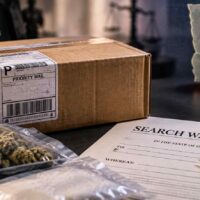
A package showing up at your door might seem routine, but it can quickly turn serious if police arrive soon after with a search warrant. In Georgia, drug investigations often start with packages sent through the mail or by carriers like FedEx or UPS. Investigators may spot a suspicious package, use a drug-sniffing dog, get a warrant to open it, set up a controlled delivery, and then ask for permission to search the address where it was sent. By the time you accept the package, officers could already be watching your home and waiting for a specific moment. A search can lead to charges for possession, intent to distribute, trafficking, or for items like firearms, cash, digital evidence, or other contraband found inside. If you are accused of a drug crime after a package delivery, I carefully review every step of the investigation because how the package and your property were searched can make a big difference in your case.
Why A Mailed Package May Draw Law Enforcement Attention
Not every package that attracts police attention contains illegal drugs. Investigators usually rely on a combination of circumstances rather than one single characteristic.
A package might stand out to police because of tips from other agencies, an ongoing drug investigation involving the sender, odd packaging, mismatched shipping details, past suspicious shipments, or a drug-sniffing dog’s alert. Federal, state, and local officers often share information if they think a shipment is coming into Georgia.
Georgia appellate cases illustrate how these investigations can develop. In State v. Mixon, postal authorities became suspicious of a package, a drug dog alerted to it, investigators obtained a warrant, and officers later arranged a controlled delivery after discovering marijuana inside.
In another Georgia case, Nelson v. State, postal inspectors investigated a duct-taped package, a canine alerted, authorities obtained a warrant to inspect the parcel, and officers later secured a warrant for the destination residence before completing a controlled delivery.
The important point is that the investigation often begins before the package reaches the person ultimately accused.
Police Generally Need Legal Authority To Search A Sealed Package
A sealed package carries important privacy protections. Law enforcement cannot simply assume that suspicious packaging gives officers unlimited authority to open it. When investigators seek a Georgia search warrant, O.C.G.A. § 17-5-21 requires a sworn application setting out facts sufficient to establish probable cause that a crime is being or has been committed. The warrant must particularly describe the person or place to be searched and the items to be seized.
In a package case, I want to know exactly what information was presented to the judge. Was there a reliable canine alert? Was information supplied by another agency? Were investigators relying on an informant? Was the information current? Did the affidavit accurately identify the package?
The mere fact that police eventually found drugs does not erase questions about whether they lawfully obtained access to the package in the first place.
A Drug Dog Alert May Become Part Of Probable Cause
Drug-detection dogs frequently appear in parcel investigations. For example, Carter v. State involved a package sent to an Atlanta-area apartment. Officers in California arranged a canine sniff, and a dog alerted to the parcel. A Georgia narcotics detective was notified, another canine examination occurred after the package arrived in Georgia, and investigators obtained a warrant before discovering cocaine. Officers then conducted a controlled delivery.
A canine alert can be important evidence supporting probable cause, but it does not mean the defense has nothing left to examine. I may review the dog’s training and certification, the circumstances of the sniff, the handler’s conduct, the information known to investigators before the alert, and what was actually included in the warrant affidavit.
Probable cause is based on the totality of the circumstances. The State still must establish that the search complied with constitutional and statutory requirements.
What Is A Controlled Delivery?
A controlled delivery occurs when law enforcement allows a package believed to contain drugs to continue to its intended destination while officers monitor what happens. Investigators may remove or document the suspected drugs, reseal the package, use surveillance teams, pose as delivery personnel, or employ equipment that alerts officers when the package is opened. The exact procedure varies from case to case.
Controlled deliveries have appeared repeatedly in Georgia appellate cases. In Dollar v. State, officers arranged delivery of a package using an officer disguised as a Federal Express employee after securing a warrant for the residence. The defendant accepted the package and signed for it using the false name appearing on it, after which officers executed the warrant.
A controlled delivery is often designed to do more than deliver evidence. Police may be trying to identify who accepts the parcel, where it is taken, who opens it, whether someone calls another person, whether drugs are moved, and what additional evidence may exist at the location.
Accepting A Package Does Not Automatically Prove You Knew What Was Inside
One of the central issues in many package cases is knowledge. Suppose a package containing drugs is sent to a house where several people live. One person answers the door and accepts it. That fact can be important, but the criminal case does not necessarily end there.
Georgia recognizes both actual and constructive possession. Constructive possession generally concerns circumstances in which someone knowingly has the power and intent to exercise dominion or control over the contraband. Georgia appellate authority recognizes constructive possession as sufficient in appropriate drug cases, but the State still has to connect the accused to knowing possession.
I may examine whose name was on the package, who ordered it, who paid for it, who tracked it, who communicated with the sender, whether multiple people had access to the residence, and what happened after delivery.
Someone who simply accepts a package for a roommate, family member, or another resident may present very different facts from someone who arranged the shipment and immediately concealed it.
A False Name Or Unusual Conduct May Become Evidence
Prosecutors often rely heavily on conduct surrounding the delivery. Accepting a package addressed to a fictitious name, repeatedly checking for delivery, communicating with the sender, immediately moving the package, or giving inconsistent statements may be used by the State to argue that the recipient knew what was inside.
Georgia cases demonstrate how such facts can matter. In Dollar, the defendant accepted a package and signed using the false addressee’s name. In Park v. State, law enforcement conducted a controlled delivery after a package containing marijuana was discovered, and the person accepting it stated that the occupants were expecting the parcel.
No single fact should necessarily be viewed in isolation. I evaluate the entire sequence because innocent conduct can sometimes look suspicious when prosecutors remove it from context.
The Package Can Lead To A Search Warrant For Your Home
One of the most serious developments in these investigations occurs when suspicion surrounding the package becomes the basis for searching a residence.
Under O.C.G.A. § 17-5-21, a Georgia warrant must be based on facts sufficient to show probable cause and must particularly identify the place or person to be searched and the things officers are authorized to seize.
This creates an important defense question: what established a sufficient connection between the package and the home?
A package addressed to a residence may be significant, but I still examine whether the warrant affidavit showed a reasonable basis for believing evidence of a crime would be found elsewhere inside that house. A warrant should not function as unlimited permission to search merely because one suspicious parcel arrived at the address.
Georgia appellate decisions such as Nelson and Dollar show investigators obtaining warrants for destination residences in connection with controlled deliveries.
Officers Must Stay Within The Law When Executing The Warrant
Obtaining a warrant is only part of the analysis. Police must also execute it lawfully. Under O.C.G.A. § 17-5-25, a Georgia search warrant generally must be executed within ten days after issuance. If executed, a duplicate copy must be left with a person from whom property was seized or, when no one is available, in a conspicuous location on the premises.
Georgia law also addresses entry into property. Under O.C.G.A. § 17-5-27, officers executing a warrant may use necessary and reasonable force under specified circumstances after giving verbal notice or making a good-faith attempt to provide notice of their authority and purpose.
I review not only why the warrant was issued but how officers carried it out.
A House Search Can Produce Charges Far Beyond The Original Package
Once investigators enter a home, a package case can expand quickly. Police may seize additional controlled substances, packaging materials, scales, firearms, cash, phones, computers, records, and other items they believe are connected to drug activity.
Under O.C.G.A. § 16-13-30, Georgia law prohibits unauthorized possession of controlled substances and separately prohibits manufacturing, delivering, distributing, dispensing, selling, or possessing controlled substances with intent to distribute. Many violations involving Schedule I or Schedule II substances are felonies carrying substantial prison exposure.
The prosecution may argue that quantities, packaging, communications, cash, scales, or other circumstances show an intent to distribute rather than simple possession. That distinction can dramatically affect the stakes of the case.
Package Weight Can Turn A Case Into Drug Trafficking
Drug trafficking under Georgia law does not always require proof that someone operated a large-scale distribution organization.
For certain substances, the weight alone can place a case within O.C.G.A. § 16-13-31 if the prosecution proves the required elements.
For example, Georgia’s trafficking statute applies to specified quantities of cocaine, fentanyl, heroin and related illegal drugs, methamphetamine, and marijuana. The statute establishes different thresholds and mandatory minimum penalties depending on the substance and quantity.
That makes laboratory testing particularly important in package cases. I want to know what substance was actually tested, its legally relevant weight or purity when applicable, how evidence was handled, and whether the State can establish the proper chain of custody.
A package that authorities initially describe simply as a “drug shipment” may ultimately carry allegations with mandatory prison exposure.
Digital Evidence May Become Central To The Case
Modern package prosecutions frequently depend on phones and electronic records.
Investigators may look for tracking notifications, payment records, encrypted messages, emails, photographs, online orders, contacts with the sender, or searches concerning shipping and delivery.
The defense should examine how police obtained that information. A warrant authorizing a home search does not automatically answer every legal question about later searches of electronic devices or online accounts.
Digital evidence can also help the defense. A phone may show that another person ordered the package, controlled the tracking information, or communicated with the sender. The same records prosecutors view as incriminating may sometimes identify weaknesses in the accusation against the person charged.
A Motion To Suppress Can Be A Major Part Of The Defense
When evidence was obtained through an unlawful search, Georgia law provides a mechanism for challenging it.
Under O.C.G.A. § 17-5-30, an aggrieved defendant may file a motion to suppress evidence obtained through an unlawful search and seizure. A search conducted under a warrant may be challenged when the warrant was insufficient on its face, lacked probable cause, or was illegally executed. The motion must be in writing and state facts showing why the search or seizure was unlawful.
This is why I want to obtain the search warrant and supporting affidavit early. I compare what investigators told the issuing judge with police reports, video, canine records, surveillance evidence, carrier information, and later testimony.
If critical evidence is suppressed, the prosecution may lose some of the evidence it intended to use to establish possession, trafficking, or distribution.
Do Not Assume The Name On The Package Decides The Case
Drug parcels are often addressed using false or unfamiliar names. That can make the evidence more complicated, not less.
Investigators may try to establish that the defendant knowingly used the false name. The defense may instead show that multiple people lived at the address, numerous people had access to the property, the defendant did not order the package, or someone else expected it.
State v. Mixon involved investigators examining prior mailing activity and the use of names connected to suspicious packages. These cases can turn heavily on circumstantial evidence.
I do not assume that receiving mail at an address proves ownership of everything delivered there.
What To Do If Police Search Your Home After A Package Delivery
If police are executing a warrant, physically interfering with the search can create additional problems. You can remain calm, avoid consenting to searches beyond what officers claim authority to conduct, and avoid trying to explain the situation while you are under intense pressure.
You also have the right to seek legal counsel.
Statements such as “I was only holding it,” “I knew something was coming,” or “those drugs belong to someone else” may sound helpful in the moment but can supply investigators with information they did not previously have.
If you are looking to hire a private criminal defense attorney following a Georgia drug search, contacting counsel promptly can allow the warrant, affidavit, arrest paperwork, and available evidence to be reviewed before important opportunities are lost.
Speak With The Mazloom Law Firm, LLC About A Georgia Package Drug Search
A mailed-package investigation may look straightforward in a police report, but the actual legal issues can be much more complicated. I may need to examine why the package was stopped, what supported the first search, whether the canine investigation was properly conducted, how officers established probable cause for the residence, what the search warrant authorized, whether officers remained within its scope, and whether the State can prove that you knowingly possessed the package or anything found inside it.
If a package delivery led to a search of your home, an arrest, or a Georgia drug charge, you do not need to assume that the prosecution’s version of events is the final word. Search-warrant cases can raise serious questions about probable cause, knowledge, possession, police procedure, and the admissibility of evidence.
If you are seeking private retained representation, contacting counsel early can help preserve opportunities to challenge the State’s evidence and prepare for court proceedings. To receive a free consultation, call our Marietta drug crime attorney at The Mazloom Law Firm, LLC, by calling 770-590-9837.

