


What Happens If Police Search Your Car Without A Warrant In Georgia?
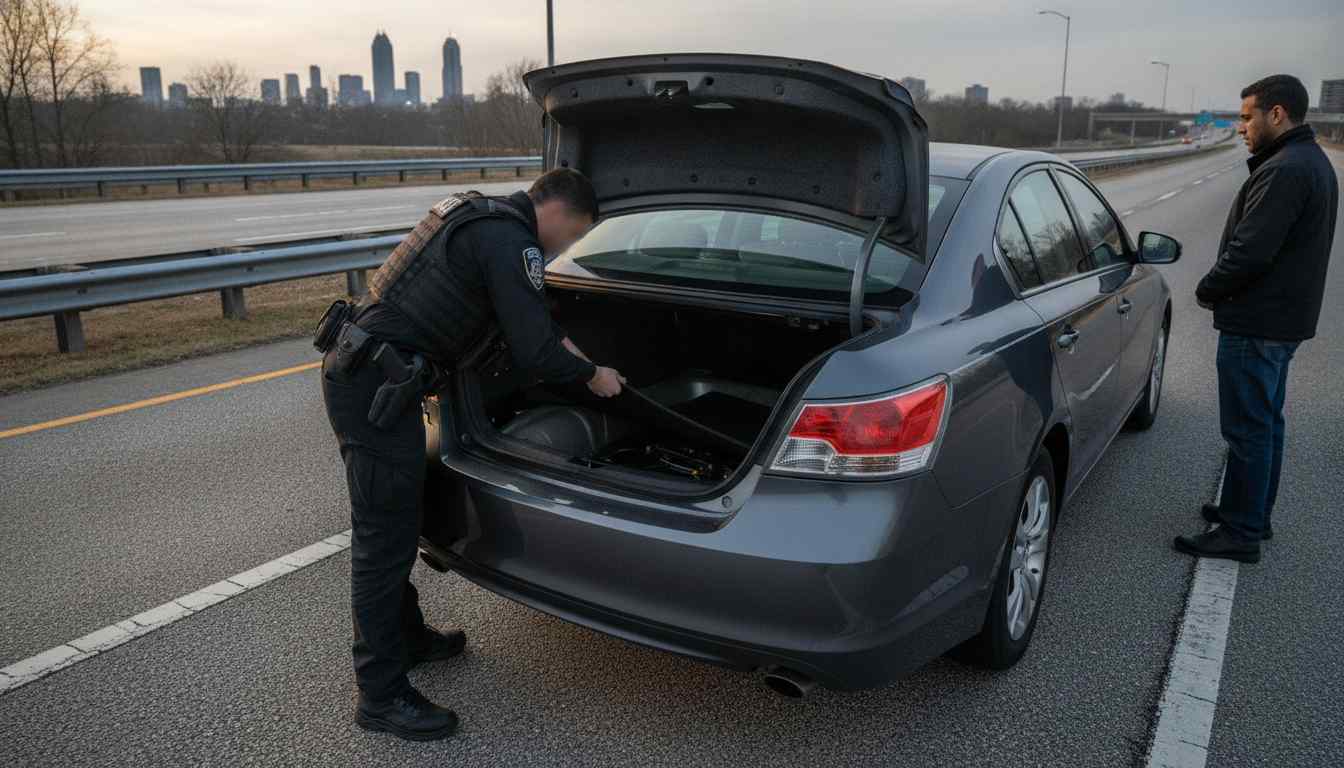
If you see a police officer searching your trunk, glove compartment, backpack, or center console without a search warrant, it might seem clear that the search is illegal. However, the law is more complex. The Fourth Amendment protects you from unreasonable searches and seizures, but there are situations where police can legally search a vehicle without a warrant. This does not give officers unlimited power to search every car they stop. The State must still prove there was a valid reason for a warrantless search. If a vehicle search leads to criminal charges, I look at why the vehicle was stopped, what the officers knew before searching, whether they asked for consent, what areas were searched, and if a recognized exception to the warrant rule applied.
Police Do Not Always Need A Warrant To Search A Vehicle
Vehicles are protected by the Fourth Amendment, but the rules for getting a warrant to search a car are different from the rules for searching a home.
One important rule is called the automobile exception. In Georgia, police can search a vehicle without a warrant if they have probable cause to think it contains illegal items or evidence.
The Georgia Court of Appeals reaffirmed this rule in Coverstone v. State, explaining that probable cause can authorize a warrantless automobile search even when there is no separate emergency preventing officers from obtaining a warrant.
The important term is probable cause. Police do not receive blanket search authority merely because they stopped your vehicle.
Probable Cause Requires More Than A Hunch
Probable cause is a higher standard than reasonable suspicion. An officer may have reasonable suspicion to stop and question you, but that does not always mean they have probable cause to search your car. Probable cause means there are facts that make it reasonable to believe evidence or illegal items will be found where they want to search.
The exact facts matter. Officers may rely on observations, information from reliable sources, evidence visible from a lawful position, and other circumstances that collectively establish probable cause.
When I evaluate the search, I look at what officers knew before they began searching. Evidence discovered after police enter the vehicle cannot retroactively supply the justification that was missing at the beginning.
Consent Can Authorize A Search Without A Warrant
Another common exception involves consent. An officer may ask, “Can I search your car?” If valid consent is freely and voluntarily given, police may be able to search without a warrant or independent probable cause.
Georgia courts have recognized voluntary consent as an exception to the warrant requirement. The State bears the burden of establishing valid consent when relying on it to justify a warrantless search.
Consent cases can involve disputes about what was actually said, whether the person had authority to consent, whether the consent was voluntary, and the scope of the permission given. You generally do not have to consent simply because an officer asks.
A Lawful Traffic Stop Does Not Automatically Permit A Vehicle Search
Being pulled over is not the same as giving police authority to search your vehicle. An officer who observes a traffic violation can ordinarily stop the vehicle and perform tasks related to the traffic investigation. That authority does not automatically permit opening containers, searching the trunk, or looking through personal belongings.
Police need a separate legal justification for the search.
This distinction becomes particularly important when an officer completes the traffic investigation but continues holding the driver to pursue a drug investigation. Georgia courts have held that police generally cannot unreasonably prolong a traffic stop without reasonable, articulable suspicion of additional illegal activity.
A Search Incident To Arrest Has Limits
An arrest can sometimes justify a vehicle search, but an arrest does not automatically permit police to search every part of a car. Georgia courts apply the federal constitutional rules governing vehicle searches incident to arrest. One circumstance exists when it is reasonable to believe that the vehicle contains evidence relevant to the crime for which the occupant was arrested.
In Morris v. State, a 2025 Georgia Court of Appeals decision, the court discussed the search-incident-to-arrest exception and its application when it is reasonable to believe evidence relating to the offense of arrest could be found in the vehicle. The offense underlying the arrest therefore matters.
Police May Conduct A Valid Inventory Search
Another exception can arise when police lawfully impound a vehicle. An inventory search is not supposed to be a disguised criminal investigation. It serves administrative purposes such as documenting property and protecting the police, owner, and property while a vehicle is in custody.
Georgia courts recognize inventory searches conducted according to standardized police procedures. In Fowler v. State, decided in 2025, the Court of Appeals reiterated that inventories conducted pursuant to standard police procedures can be reasonable under the Fourth Amendment.
When police claim an inventory-search justification, I may examine why the vehicle was impounded, departmental procedures, inventory forms, body-camera recordings, and whether officers actually followed the policy.
The Scope Of A Vehicle Search Matters
Even when police have lawful authority to search, that authority has limits. The permissible scope depends on the justification for the search. When the automobile exception applies because police have probable cause to believe a particular type of contraband is inside the vehicle, the search may extend to areas and containers capable of concealing that object.
Georgia’s Court of Appeals has explained, for example, that a lawful automobile search for drug contraband may encompass areas and closed containers where the suspected drugs could be concealed. That does not mean every lawful search permits examination of everything associated with the vehicle. The justification defines the permissible scope.
Georgia Law Provides A Procedure For Challenging An Illegal Search
If evidence was obtained through an unlawful vehicle search, O.C.G.A. § 17-5-30 allows an aggrieved defendant to file a motion to suppress. The statute permits suppression when a warrantless search and seizure was illegal. It also provides grounds for challenging a warranted search when the warrant was facially insufficient, unsupported by probable cause, or illegally executed. The motion must be written and identify the factual basis for the challenge. At a suppression hearing involving an allegedly unlawful search and seizure, the legality of police conduct can be litigated before trial.
Suppression Can Affect The Entire Criminal Case
Suppression matters because prosecutors must prove criminal charges with admissible evidence.
Suppose police search a car and discover cocaine, an unlawfully possessed firearm, or other evidence. If the search violated constitutional requirements and the court suppresses that evidence, prosecutors may lose evidence central to one or more charges.
That does not mean every questionable search causes a case to be dismissed. The consequences depend on what evidence was suppressed, what other evidence exists, and the charges involved. My job as retained defense counsel is to examine those issues before deciding which challenges should be pursued.
Frequently Asked Questions About Warrantless Car Searches In Georgia
Can Georgia Police Search My Car Just Because They Pull Me Over?
No. A lawful traffic stop does not automatically create authority to search your vehicle. Police generally need consent, probable cause, a search incident to arrest that satisfies constitutional requirements, a valid inventory justification, or another recognized exception. The precise facts surrounding the stop and search determine whether it was lawful.
Do I Have To Let Police Search If They Ask Permission?
A request for consent is not the same as an order supported by legal authority. You generally may decline a request to voluntarily search your vehicle. You should remain calm and avoid physically interfering with officers. If they search despite your refusal, the legality of their actions can later be addressed through the court process. Clearly declining consent can also eliminate a later claim that you voluntarily authorized the search.
Can Police Search My Trunk?
Potentially, but police need legal authority that extends to the trunk. If probable cause supports a vehicle search for an item that reasonably could be located in the trunk, the automobile exception may permit a trunk search. The scope depends on what officers are lawfully looking for and the justification they possessed before searching.
Contact A Marietta Criminal Defense Attorney About A Vehicle Search
If police searched your vehicle without a warrant and the search resulted in criminal charges, contact The Mazloom Law Firm, LLC to discuss private representation and next steps. We can review whether officers had probable cause, valid consent, or another lawful basis for entering the vehicle and whether a motion to suppress should be considered.
The Mazloom Law Firm, LLC represents criminal defendants throughout the entire State of Georgia, including Marietta, Atlanta, and Cherokee, Clayton, Cobb, DeKalb, Douglas, Fayette, Forsyth, Fulton, Gwinnett, Henry, and Rockdale counties. To receive a free consultation, contact our Marietta criminal law lawyer at The Mazloom Law Firm, LLC, by calling 770-590-9837.

